
July letter from Cambridge
A pick & mix of sweet things: Virginia Woolf in film, Mary Paley Marshall honoured, swifts and other summertime treats

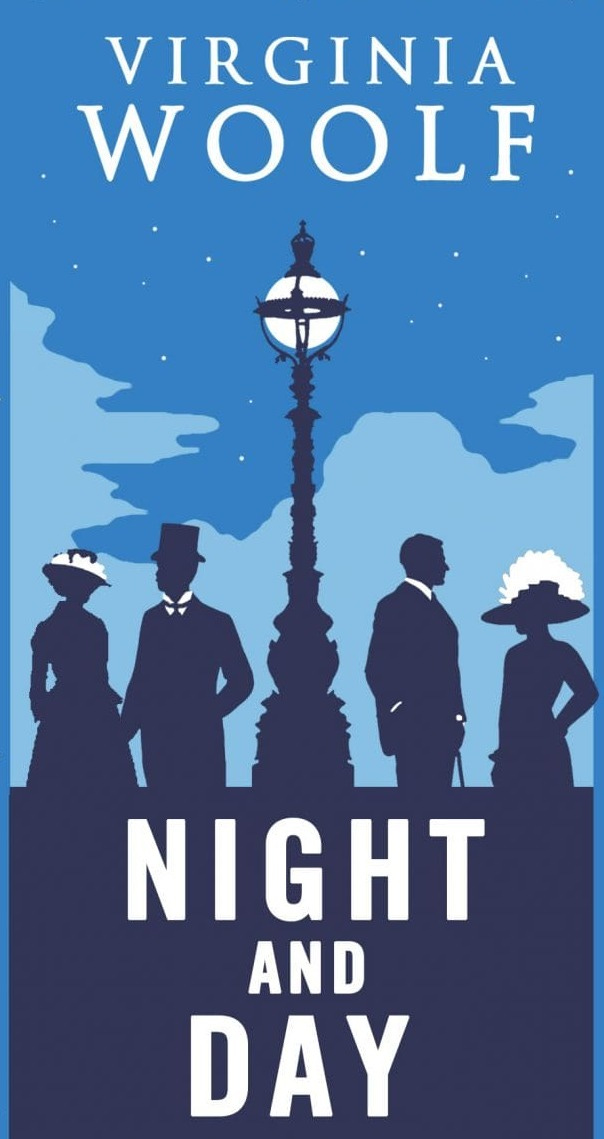
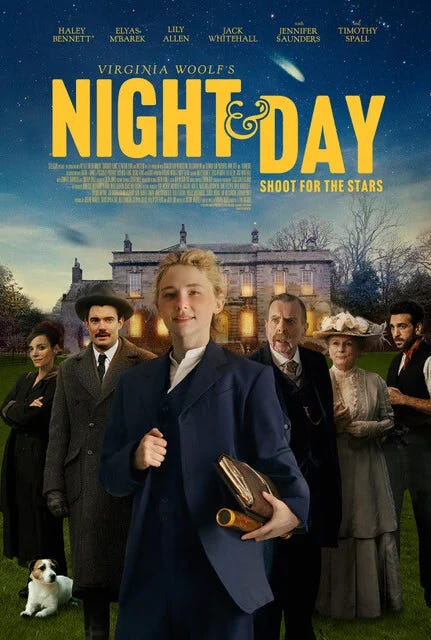
Have you seen the new film Night & Day, directed by Tina Gharavi? If so, what did you think of it? I haven’t seen it yet, but hoping to go very soon. That ‘&’ in the film’s title is doing a lot of work by the way, distinguishing it from Virginia Woolf’s novel, Night and Day, first published in October 1919.
From what I’ve heard, the film is great fun, well acted and funny, but departs quite a bit from the original. Among other things, the protagonist Katherine Hilbery becomes an astronomer rather than an amateur mathematician; she daringly ‘breaks into’ a Cambridge college disguised as a man, rather than take the legitimate (and more logical) option of signing up for one of the women’s colleges at Girton or Newnham. And is there as much emphasis in the film on the ritual of afternoon tea as there is in the book, which opens with the memorable line: ‘It was a Sunday evening in October, and in common with many other young ladies of her class, Katharine Hilbery was pouring out tea.’
However, if the film means that Woolf’s enjoyable doorstopper of a novel finds new readers that can only be a good thing. When Night and Day was first published, some literary critics were dismissive of its depiction of a Victorian world that had long since disappeared, with no reference to the shattering aftermath of the recent war. As Katharine Mansfield famously wrote in her review:
‘We had thought that this world was vanished for ever, that it was impossible to find on the great ocean of literature a ship that was unaware of what had been happening… we had never thought to look upon its like again!’1
But it’s likely that Virginia Woolf knew exactly what she was doing in this novel. She was under doctor’s orders when she wrote it, permitted to write for only half an hour a day, and she wanted to turn away, for a while, from the pain and uncertainty of the present. She had reviewed The Middle Years by Henry James for the TLS in 1917, and admired it greatly and she wanted to explore the romance of the Victorian era for herself. It was a time when, as well as strangely formalised teatimes, there was a bubbling excitement about scientific discoveries and the possibility of women entering higher education for the first time.
In 1904, Woolf and her siblings had been happy to leave the gloom and restrictions of their old life behind following the death of their father Leslie Stephen, when they moved to bohemian Bloomsbury. Then, she was too busy trying to establish herself as a writer to see anything good about her upbringing, and Hermione Lee calls Night and Day Woolf’s ‘long, melancholic comedy of the break with Victorianism’. The novel is both Woolf’s tongue-in-cheek tribute to the past and a sign that she was now preparing to break with formal writing traditions and leave the stuffy teatime rituals behind.
I’ll be giving a talk on Virginia Woolf’s friendship with Rupert Brooke and his Neo-Pagan circle on Thursday this week as part of Literature Cambridge’s online summer course. There’s still time to sign up, and if you can’t commit to attending lectures at the scheduled hour, most sessions will be recorded and available to listen to later. More in my short introduction to the Neo-Pagans here.
A blue plaque for Mary Paley Marshall
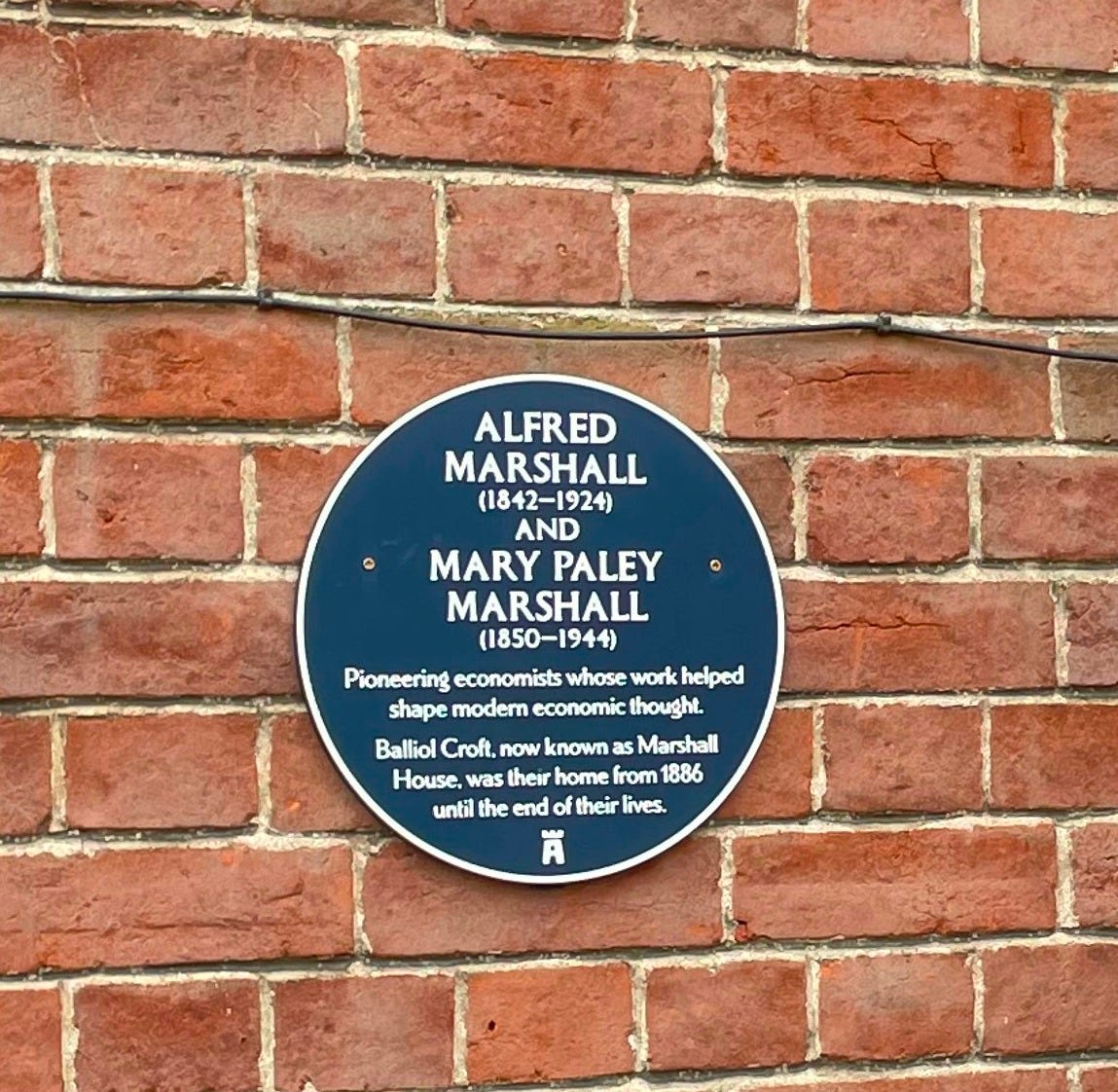
In mid-June I was delighted to be invited to attend a garden party at Lucy Cavendish College Cambridge to celebrate a new commemorative plaque on the former home of the married economists Mary Paley Marshall and Alfred Marshall. They called the redbrick villa on Madingley Road that they built in the 1880s ‘Balliol Croft’ as a homage to their happy years in Oxford. When the house and land were acquired by Lucy Cavendish College, it was renamed ‘Marshall House’ in tribute to the work of Alfred Marshall, the leading economist of his era.
But now the new plaque by the front door pays equal tribute to the pioneering work of Mary Paley Marshall. For many years the house was lived in by the college’s president during their term of office, so it was fitting that former president Dame Veronica Sutherland and her husband Alex Sutherland were there for the unveiling and give us great insights into the house as well as the Marshalls’ marriage. Finding my name and Cambridge Ladies’ Dining Society post on Mary Paley Marshall included by the front door as part of the current exhibition was very touching indeed (see the Lucy Cavendish website article here). My thanks to Aditya Prasanna Bhattacharya, Professor Mary Wrenn and President Girish Menon for inviting me, and I’ll be writing more soon about my recent research into the life and work of Mary Paley Marshall.

Events and readings
If you’re in the UK, did you manage to bag a ticket to see the forthcoming British Museum exhibition starring the Bayeux Tapestry? After several days’ queuing online, I was lucky enough to get a ticket – it felt as if I’d won a prize – and more will be released for the 2027 later this year.
‘Let’s do a ‘couch to 5k’ for reading’ Naomi Alderman suggests. It’s an excellent new Substack scheme to encourage us all to read more, and read better, by setting ourselves goals to commit to and challenges to meet. There will be three ‘reading tracks’, so suitable for everyone. Find out more here.
If you enjoy so-called ‘middlebrow novels’ and feel that they are overlooked and under-appreciated, do see Harriet’s Note below. She wants suggestions from you about which novels you would like to see featured in her excellent Substack.
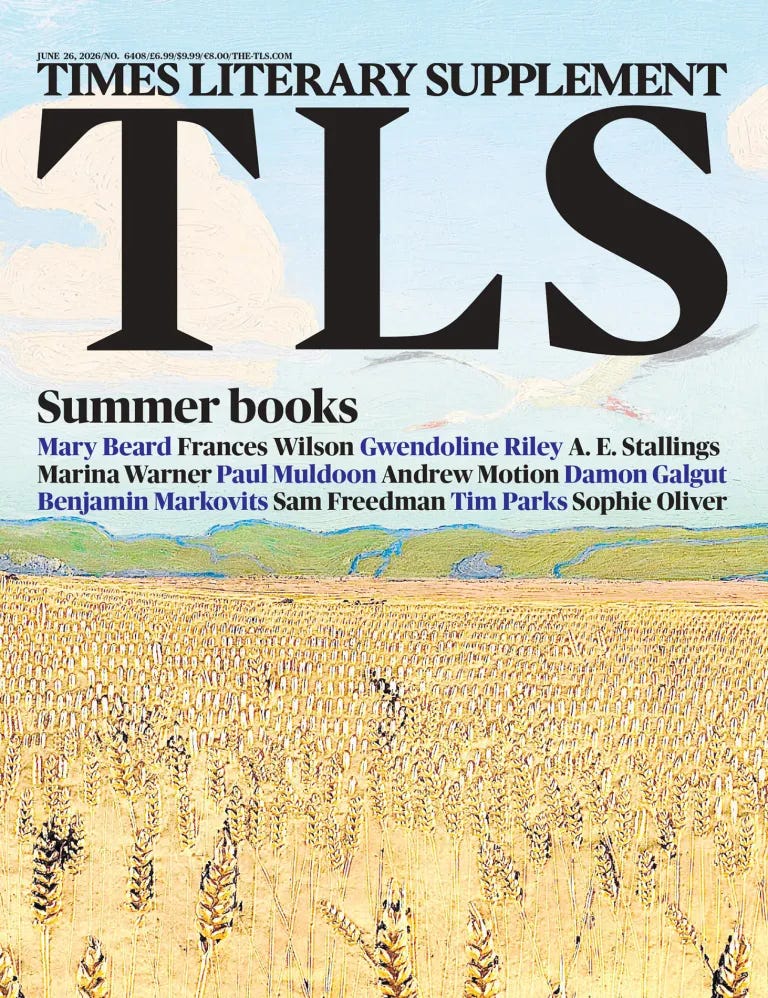
In the latest ‘Summer Books’ edition of the TLS I wrote about a wonderful new collection of essays and articles by the publisher, author and activist Margaret Busby. You can find my review here, and I’ll include extracts soon.
This week’s Weekend Supplement from India Knight is a delight! She even makes me take more interest in the World Cup (though I definitely won’t be staying up to watch a certain match in the early hours of the morning). Sticking more to my lane, I loved being introduced to the work of two artists I hadn’t known about before, the talented emerging artist Florence Champ (whose work you can see here) and the overlooked Suzanne Cooper (1916-1992), a selection of whose work is currently being shown at the Aldeburgh Gallery. A good excuse for a seaside excursion.
On the subject of forgotten women artists, I love how Deborah Vass tells the story of the hugely talented Shirley Thompson, who, because she was happened to be married to Len Deighton, was more famous as a ‘spywriter’s wife’ than a successful book and magazine illustrator in her own right. In a 1964 interview she said:
“I expect the real way being the wife of a spy writer affects me is that he is at home all the time, and watching all the time. I’m aware of him. I burn the food and he’s there, his head around the door asking me what the hell I think I’m doing. Or I’m sitting quietly listening to Mrs Dale’s Diary and he’s listening angrily to me listening.”
And, returning to Virginia Woolf (and afternoon tea time) if you’re in Cambridge on 4 August do come along to Waterstones bookshop at 3pm to hear Karina Jakubowicz introducing her new book, Gardens in the Work of Virginia Woolf: Nature, Modernity and the Politics of Space (2026). You can book a ticket here.
And finally…
… I was fortunate enough last week to spend two peaceful afternoons reading Mary Paley Marshall’s letters to Joan Robinson in the archives of King’s College Cambridge. The archive room is situated on the fourth floor of the library, and has windows overlooking the beautiful Front Court and King’s College Chapel. I could see new graduates in their academic gowns being photographed by proud parents, people queuing up for evensong in the chapel and porters warning people to stay off the desiccated lawn. It’s a wonder that I got any reading done, but I did!
At 5 o’clock, leaving via the porters’ lodge, I heard high-pitched squealing above my head. The swifts are regular summer visitors to the UK and Ireland, and for many of us they always provide the nostalgic sound of summertime. Their playful wheeling about was too speedy to be captured by my phone camera, but they are such a lovely uplifting presence every year. I’d love to hear about what for you are the best things are about the season at this time of year, whatever the weather. Until next time, and thank you for reading!
If you enjoyed this post, I would be so grateful if you would click on the little heart as it helps others to find my work. For more on Virginia Woolf’s father Leslie Stephen, whose influence she later came to appreciate, see my post below.
An invasion of croquet

On this day in 1904, the English author, historian and biographer Sir Leslie Stephen (1832-1904) died. He was a co-founder of the Alpine Club and the Dictionary of National Biography, among other achievements, but is perhaps best known today for being the father of Virginia Woolf and Vanessa Bell. Their mother Julia Duckworth was Stephen’s second wife, but before he married his first wife Minny Thackeray, he had led a very different life as a Cambridge scholar and Church of England minister. This post is about how Leslie Stephen changed his mind.

Quoted in Virginia Woolf and the Victorians, ed. Steve Ellis (CUP, 2007), p.14.
Loved this insightful intro into this side of Virginia Woolf, which was was totally new to me. And oh my heavens!: “Finding my name and Cambridge Ladies’ Dining Society post on Mary Paley Marshall included by the front door as part of the current exhibition was very touching indeed” . This is marvelous!
I found the film of Night and Day disappointing and disliked the sound track music. I can't say exactly why but I was bored.