Hello, and best wishes for International Women’s Day 2026. One of the things I particularly like to celebrate in my research and writing about women’s lives at the turn of the century is their network of friendships, and how opened doors to other connections and opportunities. This week features a brief introduction to Pernel Strachey (1876-1951) particularly in her connection to three other women I write about: Virginia Woolf, Jane Harrison and the novelist and biographer Elizabeth Jenkins.Read on to find about a literary podcast I took part in last week, news of our next Twentieth-Century book and how another long-forgotten novel by Elizabeth Jenkins is being reissued.
Introducing Pernel Strachey
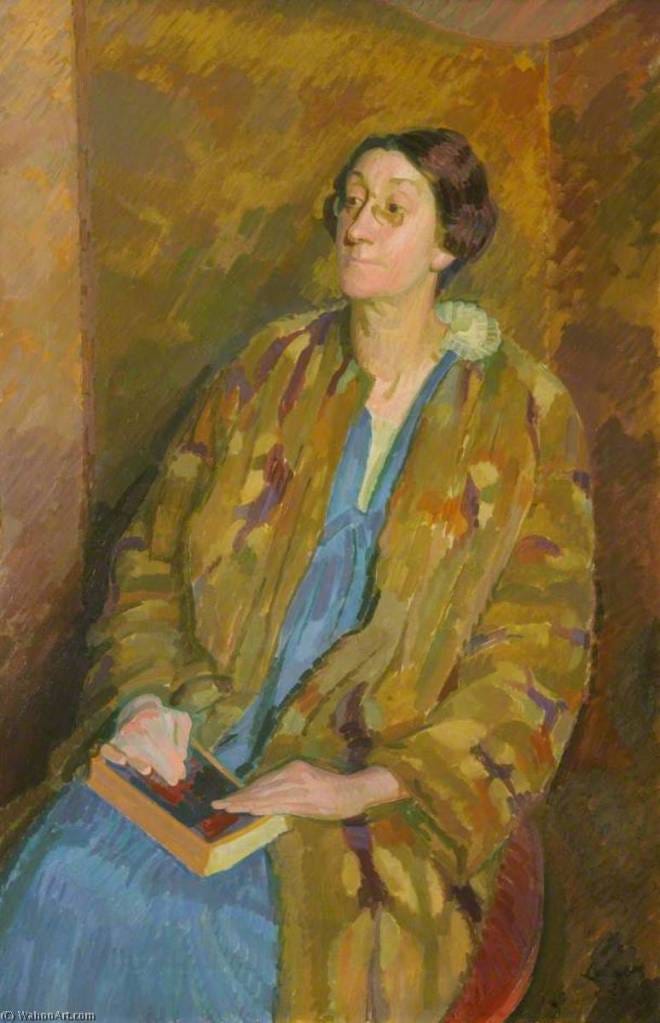
In 1926 the artist Henry Lamb painted a portrait of Pernel Strachey (see above), wearing one of her distinctive and stylish brocade coats, holding a book and with her head tilted inquisitively to one side. ‘The strangeness and magic are all there,’ her former student, the novelist and biographer Elizabeth Jenkins writes of this portrait, ‘but do not exceed those qualities in the original.’ In her memoir The View from Downshire Hill (2004) Jenkins fondly recalls her time as a student at Newnham College Cambridge in the early 1920s, with particularly warm memories of her college principal Pernel Strachey, ‘to know whom, even slightly, was one of the experiences of a lifetime’.
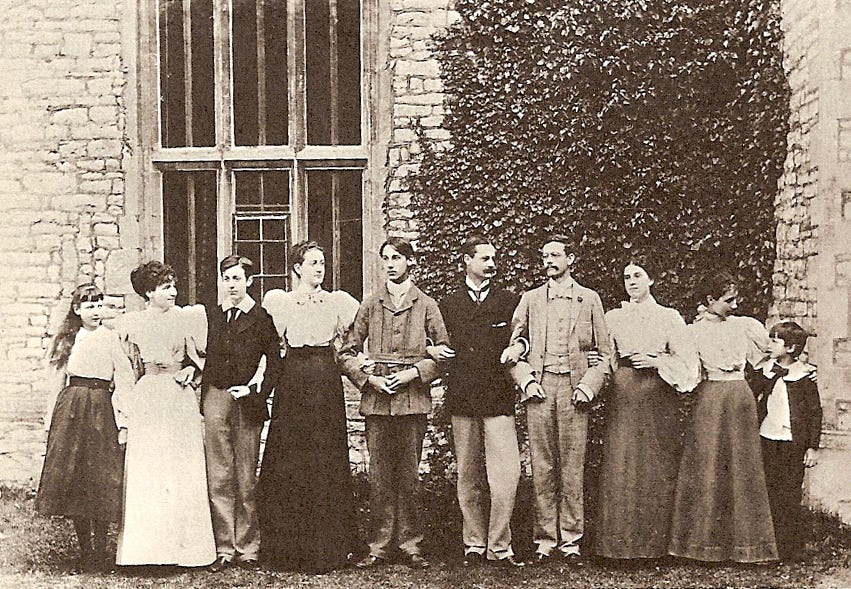
Sons and daughters of Sir Richard Strachey and Lady Strachey. Left to right: Marjorie, Dorothea, Lytton, Joan Pernel, Oliver, Dick, Ralph, Philippa, Elinor, James. From the book Lytton Strachey, His Mind and Art (1957) by Charles Richard Sanders, via Wikimedia Commons.
Joan Pernel Strachey was born in 1876, a member of the large and distinguished Strachey family (Lytton Strachey was her younger brother) with their ‘characteristically lively intellectual interests, wit and argumentative engagement with ideas,’ as Helen Fowler writes on Newnham College’s website here. Her mother Jane Maria Strachey (née Grant) was a campaigning suffragist and a close friend of Millicent Garrett Fawcett, one of the founders of Newnham, so it’s not surprising that her daughter Pernel became a student there in 1895. She studied history before changing her subject to modern and medieval languages, specialising in early French. After studying further in Paris, she accepted a teaching post at Royal Holloway College, now part of London University. She returned to Newnham as residential lecturer in French and Romance languages in 1905, becoming Director of Studies in Modern Languages in 1917.
Tall and thin, with a dry sense of humour, Strachey was affectionately known by Newnham students as ‘the Streak’. She was kindly and took a proactive interest in their’ welfare, as the future writer Elizabeth Jenkins recalls. In 1927 Pernel was unanimously elected to lead the college. ‘As Principal, Pernel Strachey showed an acute ability, deceptively hidden, for management, fund-raising and an awareness of every aspect of college life,’ as Fowler notes.
When she heard that Elizabeth Jenkins was planning to move to London with hopes of becoming a writer, Strachey gave her a personal introduction to her lifelong friend, Virginia Woolf. Jenkins visited the Woolfs’ house in Bloomsbury regularly for a few months in 1927, and seemed to fit in well with their circle, until suddenly, inexplicably, she stopped receiving invitations. Or rather, this is how Jenkins chose to remember the break with Woolf; Elizabeth Bowen recalls a bitter row between the two women, as Henry Oliver writes in his post here.
Two years later Virginia Woolf wrote in her diary how much she had enjoyed reading Jenkins’s first published novel Virginia Water (1928), which she praised, rather patronisingly perhaps, as ‘a sweet white grape of a book.’ Jenkins herself came to dislike this first version of her novel so much that she bought up all the copies she could find and destroyed them.
But the publisher Victor Gollancz was so impressed by her writing that he offered her a three-novel contract and republished Virginia Water in 1929. It was the beginning of Elizabeth Jenkins’s long and productive writing career as a novelist and biographer, and her memoir The View from Downshire Hill was published in 2004, when she was 99 years old.
We’ll start reading The Tortoise and the Hare by Elizabeth Jenkins, first published in 1954 and reissued as a Virago Modern Classic in 1983, later this month as part of our Twentieth-Century book club. I hope you’ll join us.
Cambridge Ladies' Dining Society is a reader-supported publication. To receive new posts and support my work, consider becoming a free or paid subscriber.
Today’s post is the story of how, back in the 1970s, the UK publisher Virago started re-issuing novels by international women authors from the 19th and 20th centuries. Today there are lots of publishing imprints (eg Daunt Books and Persephone in UK; McNally Editions in USA) as well as magazines and literary podcasts that focus on recovering ‘lost’ literature, including
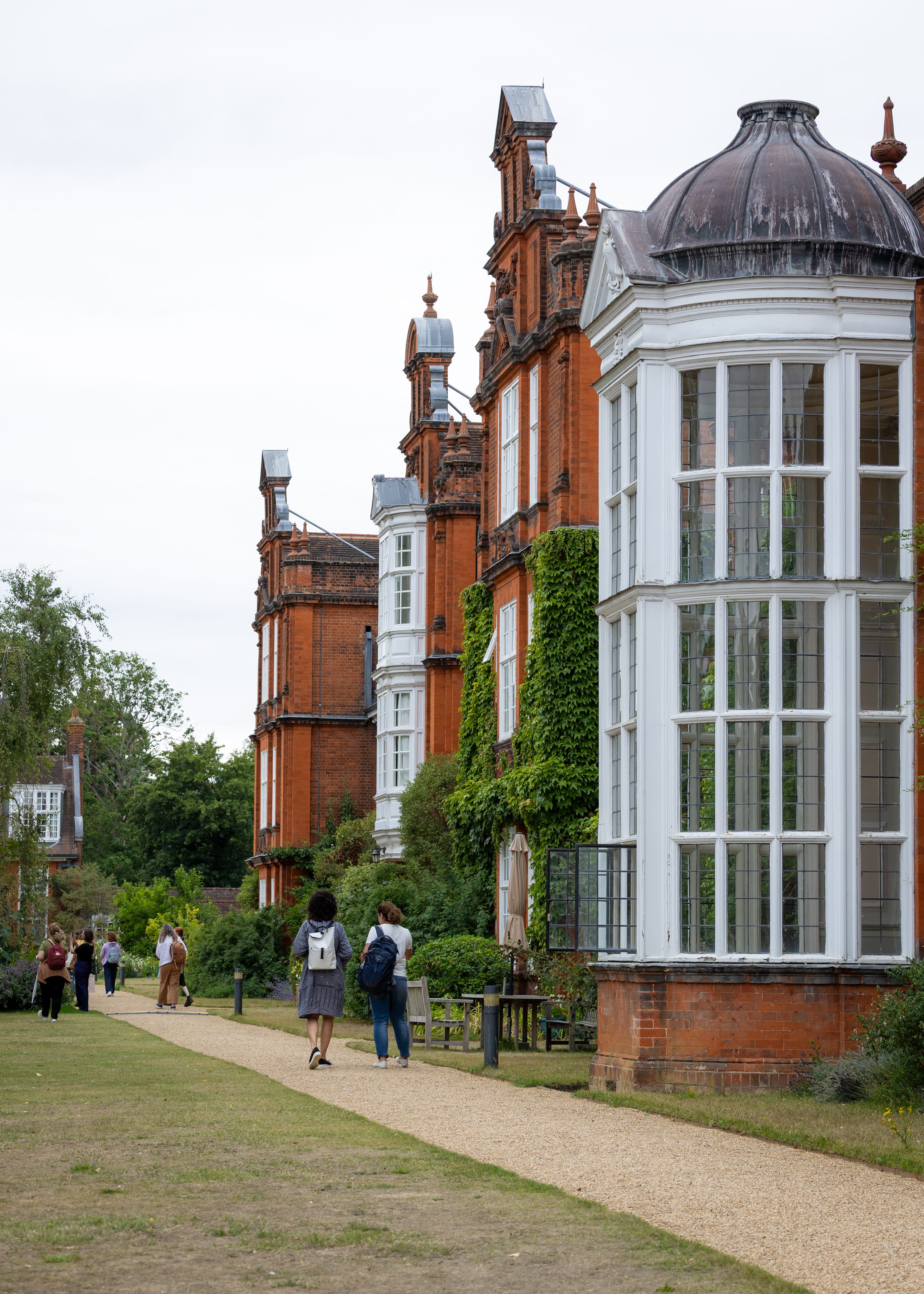
‘The gardens of Fernham lay before me in the spring twilight, wild and open, and in the long grass, sprinkled and carelessly flung, were daffodils and bluebells, not orderly perhaps at the best of times, and now wind-blown and waving as they tugged at their roots. The windows of the building, curved like ships’ windows among generous waves of red brick, changed from lemon to silver under the flight of the quick spring clouds…’ (Virginia Woolf, A Room of One’s Own, 1929)
It was fantastic to be a guest on the Virginia Woolf podcast this week, discussing the Classical scholar Jane Harrison with Karina Jakubowicz. Karina began her interview by reading the famous passage above from Woolf’s A Room of One’s Own, which captures beautifully the atmosphere of Newnham College’s gardens in springtime. Although Woolf refers to a fictional Oxbridge college called ‘Fernham’, it’s clear that she was inspired by her visits to Newnham over the years, especially to see her friend Pernel Strachey after she became Principal there in 1921.
After a young student called Elsie Phare invited Woolf to give a talk at the Newnham Arts Society in October 1928 (see my post, ‘Not Afraid of Virginia Woolf’) Virginia and Leonard arranged to stay in ‘Pernel’s high ceremonial rooms, all polished and spectatorial’, as Woolf wrote, over the college’s Pfeiffer Arch.
The following spring, as she reworked the lectures on women and literature she gave at Newnham and at Girton College for A Room of One’s Own, Woolf evokes some of the sadness she felt at the time in returning to Newnham and thinking about her absent friend and mentor, the scholar Jane Harrison, who had died six months previously. Her memories of Jane, who loved the college gardens, seem to conjure up her ghostly figure, just at the corner of Woolf’s vision as she herself walked through the grounds of ‘Fernham’ at twilight.
‘…and then on the terrace, as if popping out to breathe the air, to glance at the garden, came a bent figure, formidable yet humble, with her great forehead and her shabby dress—could it be the famous scholar, could it be J– H– herself?’ (Virginia Woolf, A Room of One’s Own, 1929)
Woolf was impressed by the Newnham students and ‘their charm, beauty and intelligence’ and encouraged her nephew Julian Bell (see my post about him here) to give a talk about French literature to Newnham’s Arts Society, ‘so perhaps he’ll get intellectual company there’.
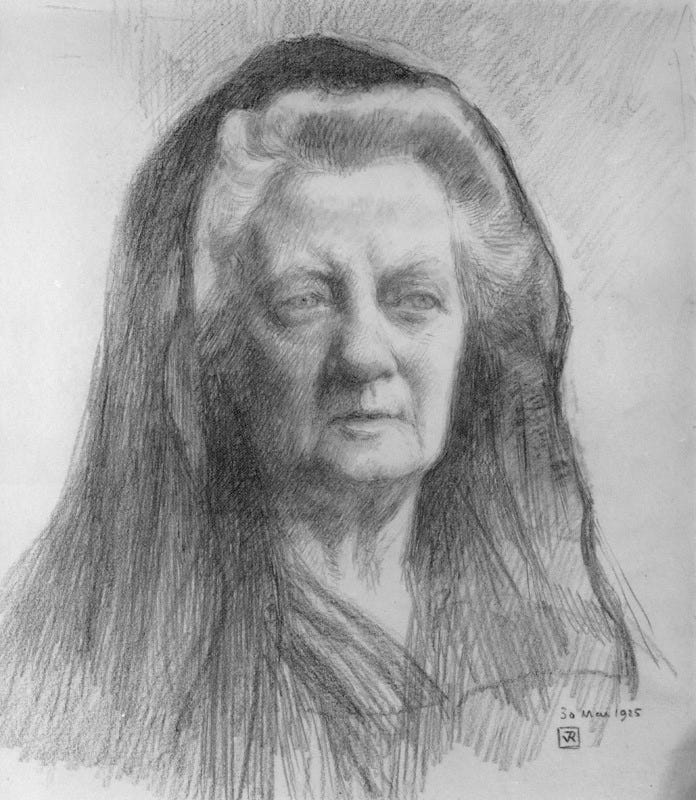
Portrait of Jane Ellen Harrison by Théo van Rysselberghe (1925) Public domain, via Wikimedia Commons.
‘I like to live spaciously, but rather plainly, in large halls with great spaces and quiet libraries. I like to wake in the morning with the sense of a great, silent garden round me.... if I had been rich I should have founded a learned community for women... as it is, I am content to have lived many years of my life in a college’. (Jane Harrison, from her memoir Reminiscences of a Student’s Life, first published by the Woolfs’ Hogarth Press in 1925)
More books, old and new
It was ‘World Book Day’ last Thursday, which in the UK and Ireland is celebrated in March by schoolchildren dressing up as their favourite characters from fiction (or just dressing up for fun). The idea is to remind us all of the lifelong pleasure that reading books can bring… and in these troubled times, a refuge from the storms outside.
Karina Jakubowicz’s new book Gardens in the Work of Virginia Woolf has just been published by Edinburgh University Press, and there’s a 30% discount here. I can thoroughly recommend her ‘Woolf in the World’ Substack, and do check out Literature Cambridge’s online lecture series too. I’m pleased to be taking part in its summer school again this year, giving a talk on Rupert Brooke and the Neo-Pagans. More details soon.
Exciting news about Elizabeth Jenkins this week. Apart from The Tortoise and the Hare, many of her books have, sadly, long been out of print. Later in 2026 a new edition of her 1968 novel Honey is going to be published by the wonderful Daunt Books, with an introduction by Monica Heisey. The publishers describe it as ‘a delightfully decadent novel about lust, love and clinging to the last of youth, told with sharp irony and salacious wit’.
Daunt Books are also reissuing all thirteen of Booker Prize-nominated Beryl Bainbridge’s brilliantly acerbic novels, starting this month with The Bottle Factory Outing and An Awfully Big Adventure, with a new introduction by Yiyun Li (12 March 2026).
If you’re a Rebecca West fan, Deborah Zafer is keen to get your support for her long-running campaign for an English Heritage blue plaque in London to honour the writer’s life and work there.
That’s it for this week, thank you for reading, and as ever I would love to hear your thoughts about any of the topics mentioned here. What have you been enjoying reading recently? Is there a type of book you turn to as comfort reading in difficult times? And if you have favourite novels about friendship I would love to hear your recommendations; also about what happens when friendships go wrong.
Cambridge Ladies' Dining Society is a reader-supported publication. If you enjoyed this post, do please ‘like’ or share it, as it helps others to find my writing. Thank you!
Thank you Ann, you always give me great ideas for my tbr. And always get me to meet great women.
How nice that children dress up like their favourite characters,we should have imported this instead of Halloween (no offence for Halloween,but...we have carnevale).
Talking about friendship, the greatest novel about it is Narcissus and Goldmund,by Hesse, in my opinion.




thank you for including my piece, Ann!
Thank you Ann, you always give me great ideas for my tbr. And always get me to meet great women.
How nice that children dress up like their favourite characters,we should have imported this instead of Halloween (no offence for Halloween,but...we have carnevale).
Talking about friendship, the greatest novel about it is Narcissus and Goldmund,by Hesse, in my opinion.